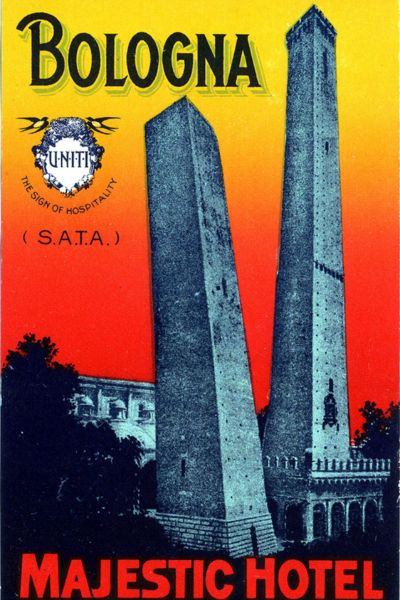
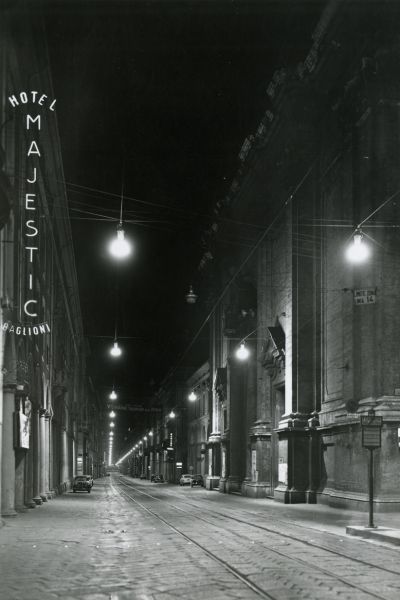
History
The imposing building was built as an Archbishop’s seminary, opposite the city's cathedral, Saint Peter's. The project was entrusted to architect Alfonso Torreggiani by cardinal Prospero Lambertini, who became Pope Benedict XIV in 1740.
The area, crossed by an ancient Roman road, previously hosted the mediaeval residences of the Ariosti, Rustighelli and Arrigoni families.
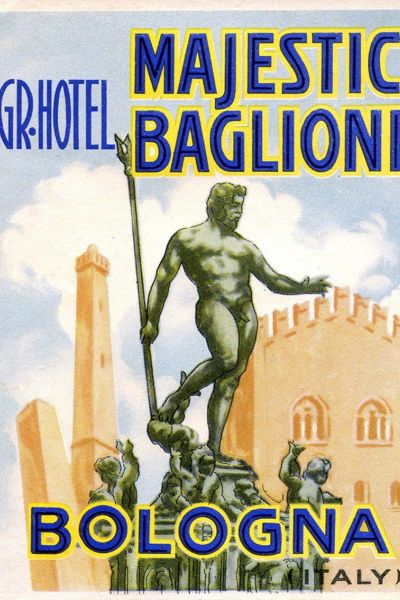
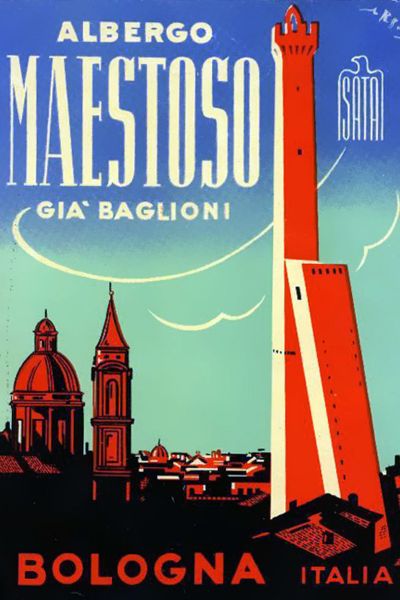
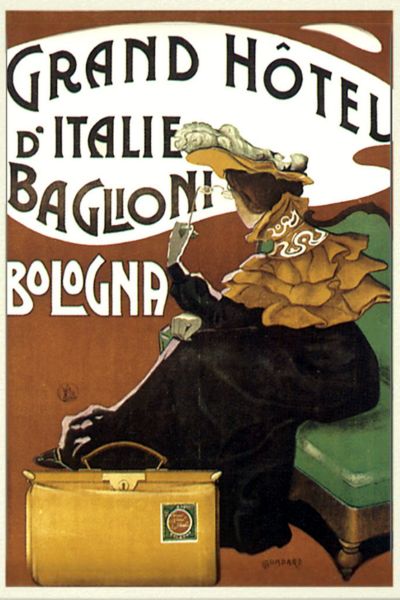
In 1912 the palazzo was transformed into a hotel, starting an activity which continued until 1978. The current configuration of the Grand Hotel Majestic “già Baglioni” is the result of an attentive architectural reworking, which added value to Torreggiani's original structure and exploited new space, including the evocative octagonal view over Torre di Palazzo Fava.
Staying in the hotel means immersing yourself in a setting which preserves and enhances important artistic testaments. Of these, Sala Europa, adjacent to Palazzo Fava, represents one of the highest expressions of 16th-century painting: an authentic masterpiece decorated with the frescoes of Agostino Carracci, Annibale Carracci and Ludovico Carracci, which narrates the myth of the Rape of Europa.
In this setting of extraordinary cultural intensity, meetings and conventions acquire a distinctive value, enhanced by a unique and highly prestigious context.

THE PALACE
The imposing building which houses the Grand Hotel Majestic “già Baglioni”, for over a century one of Italy’s most prestigious hotels, is set on the most iconic street of Bologna's historic centre, and was built for a very different purpose
In 1732, Bolognese cardinal Prospero Lambertini — later to become Pope Benedict XIV — began the construction of a new Archbishop's Seminary, entrusting the project to architect Alfonso Torreggiani. The works took around 20 years, and in 1751 the seminarists were able to move into the new spaces.
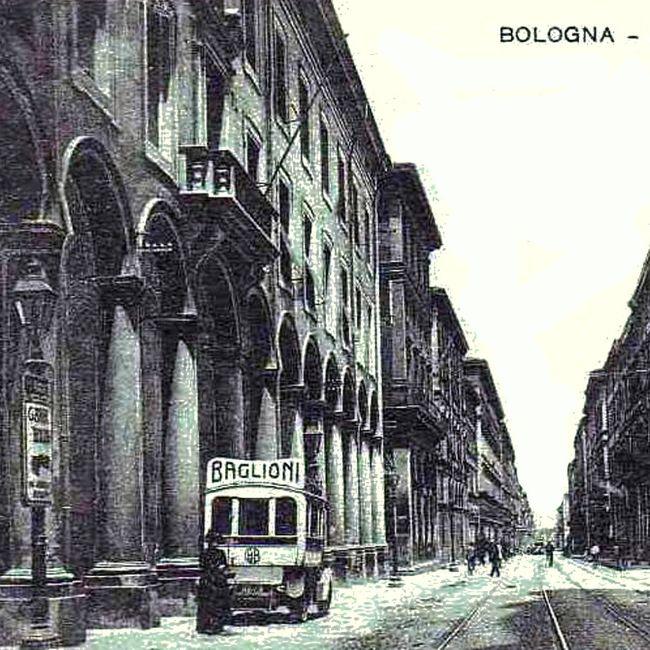
In 1772, cardinal Vincenzo Malvezzi built the 23-arch portico along modern-day Via dell’Indipendenza, designed by architect Francesco Tadolini, with the goal of expanding the area in front of the Cathedral of Saint Peter and making it more usable.
The structure of the Grand Hotel Majestic “già Baglioni” adjoins that of the nearby Palazzo Ghisilardi Fava, one of the most significant examples of Renaissance Bolognese architecture, built between 1484 and 1491 to the design of Mastro Zilio Montanari. Today, the palazzo is part of the cultural itinerary promoted by the organisation Genus Bononiae – Fondazione Carisbo, which aims to safeguard and promote the heritage and peculiar character of the city of Bologna.
The palazzo is located in one of the areas of greatest archaeological and architectural interest in the historic centre of Bologna.
Located in proximity to the crossroads between the two main arteries of the Roman road system – the cardo (modern-day Via dell’Indipendenza, running north-south) and the decumanus maximus (today Via Rizzoli and Via Ugo Bassi, the urban section of the Via Emilia dating to 189 BCE, running east-west) — retains numerous layers of construction in its foundations which trace back from ancient times to the late middle ages
In the underground areas of the Grand Hotel Majestic “già Baglioni” you can still see a section of road of around ten metres, belonging to one of the minor decumani and still in excellent condition, which clearly shows its stratigraphic composition.

In June of 1909, the building of the Archbishop’s Seminary was sold by the curia and turned into a hotel by the engineer Gasperini.
Its privileged position, combined with its vicinity to the theatres and most popular locations of the age, quickly made the Baglioni one of the most popular destinations for elite tourism.
In 1924, an additional floor was added. On the night of the 18th of October 1944, in an attempt to hit a Nazi command based in the hotel, six members of the G.A.P. (Gruppi di Azione Patriottica) partisan group placed a charge of TNT in the vicinity of the building, destroying its central section and part of the façade. The current appearance is therefore also the result of the subsequent renovations.

frescoes and paintings
On the piano nobile of the Grand Hotel Majestic “già Baglioni” is one of the most prestigious, and historically and artistically important frescoed rooms in Bologna civil construction: the so-called “Camerino di Europa”. This work probably represents the first major commission awarded to brothers Agostino Carracci and Annibale Carracci. The assignment came fortuitously: their father Antonio, tailor to count Filippo Fava, lobbied for the work to be awarded to his sons, who accepted despite the extremely limited compensation. The artistic value of the cycle is quite another matter, representing a frieze in the upper part of the walls related to the stylistic models taken from and popularised in Rome by Raffaello Sanzio and his circle.
In this room, with extraordinary capacity for narrative summary, the story of Europa is represented in four scenes — inspired by book II of Ovid’s Metamorphoses — the young daughter of Phoenix and Telephassa, whom Zeus was enamoured with, was abducted by the god in the form of a bull and taken to Crete, where she gave birth to Minos, mythical king of the island.
The narrative is structured as four different scenes, effectively “faux paintings”, as Malvasia put it: Zeus, in the form of a bull, let’s Europa approach him; Zeus is led by the young girl; Europa climbs onto the bull’s back; the rape of Europa. Faux bas-reliefs to the sides of the panels and grotesque decorations complete the frieze, enhancing the decorative structure.
It is nevertheless complicated to attribute the painter of the work, or its individual parts, to one of the Carracci brothers in particular. Over time, critics have advanced different interpretations. Some academics hypothesise a broadly balanced division of the work between Annibale Carracci and Agostino Carracci; others believe that Agostino did the bulk of the work; while the most widely accepted hypothesis today posits that Annibale was responsible for the four panels dedicated to Europa, and Agostino the grotesque decorations.
This theory attributes a role of greater importance to Annibale Carracci than that of Agostino Carracci, despite recognising the room’s grotesque decorations — due to their originality and philological consistency — as being one of the most interesting elements of the entire frieze. Some academics also believe it is possible that their cousin Ludovico Carracci contributed to the work. There is, in any case, agreement in attributing to Annibale the panel depicting Europa mounting the bull. Over and above the putative attributions, the only generally agreed on data involves the chronology of the work. The inscription dated 1584, present in another room of Palazzo Fava at the base of the frescoes with the Story of Jason — believed to have been painted immediately thereafter — allows the creation of the Camerino to be dated to no later than 1583.
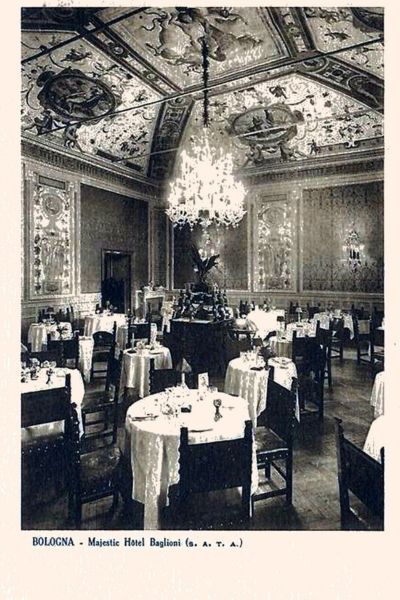
Also of particular interest are the frescoes in the dining room of the hotel’s restaurant, which depict the myth of Phaeton, caught in the moment of his fall, struck down by Zeus’ thunderbolt and framed by classically inspired grotesque decorations.
In this case, the question of attribution is more complex and remains unresolved to this day. It is believed that the decoration precedes the work of the Carraccis, therefore ruling out attribution to painters such as Francesco Albani or Bartolomeo Cesi, who worked in Palazzo Fava at a later date, until the end of the 16th century, and engaged in the Sale dell’Eneide on the piano nobile. One possible artist put forward is Lorenzo Sabbatini, who was a Bolognese mannerist painter, pupil of Parmigianino and close to Giorgio Vasari, who worked not only in Bologna but also in Florence for the Medicis and in the Vatican.

A Century of Excellence
“Grand Hotel Majestic ‘già Baglioni’ – Bologna. Cent’anni di eccellenze” (Grand Hotel Majestic ‘già Baglioni’ – Bologna. One hundred years of excellence) is a volume which recounts the history, character and cultural legacy of the only luxury five-star hotel in Emilia-Romagna.
Edited by Giancarlo Roversi, the book contains contributions from authoritative academics and names from Italian culture — Beatrice Buscaroli, Mario Fanti, Paola Foschi, Rosaria Greco Grassilli, Guido Lenzi, Carlo Monzani, Stefano Quarenghi, Daniela Sinigalliesi — who reconstruct the role of the Grand Hotel Majestic “già Baglioni” as a symbolic location of the city from different points of view.
I have always seen in the Grand Hotel Majestic «già Baglioni» one of the most immediate symbols of Bologna without any awe of the most vaunted ones, first and foremost the Two Towers. And this is because the old «Baglioni» does not constitute a crystallized expression of the city, but one of its most vivid incarnations and reflects its most candid soul, its vocation for hospitality, the art de vivre, its taste for beauty and the quality of life.
Knight of Labour, MARIO BANDIERA
110 years of History
In the heart of the Belle Époque, on February 15, 1912, the Hotel Baglioni, now the Grand Hotel Majestic “già Baglioni”, opened its doors. The initiative was born from the intuition of entrepreneur Guido Baglioni, who the previous year had acquired the elegant spaces of the ancient Archbishop's Seminary, an eighteenth-century building built on the historic residences of the Ariosti and Arrigoni families. Since then, the hotel has become a benchmark for prestigious hospitality and a protagonist in Bologna's cultural and social life.